It’s the end of the quarter. Your income statement shows big growth in sales, a healthy profit and your bankers congratulate you on a strong few months. On paper your business is thriving. Yet when you log into your online banking, you’re scrambling to cover payroll, vendor invoices, or upcoming tax instalments.
If this sounds familiar, you’ve experienced the critical divide between paper profit and actual cash flow. It’s one of the most frustrating paradoxes in small business ownership, and failing to understand the distinction is one of the leading reasons why technically profitable businesses fail.
The Core Difference: Accrual Accounting vs. Real-Time Cash
To understand why your bank account doesn’t match your Income Statement, you first have to look at how accounting works under standard accrual principles:
- Paper Profit (Net Income): Profit is calculated as Total Revenue earned minus Total Expenses incurred over a specific period. Revenue is recognized the moment you deliver a service or invoice a client—not when the cash hits your account.
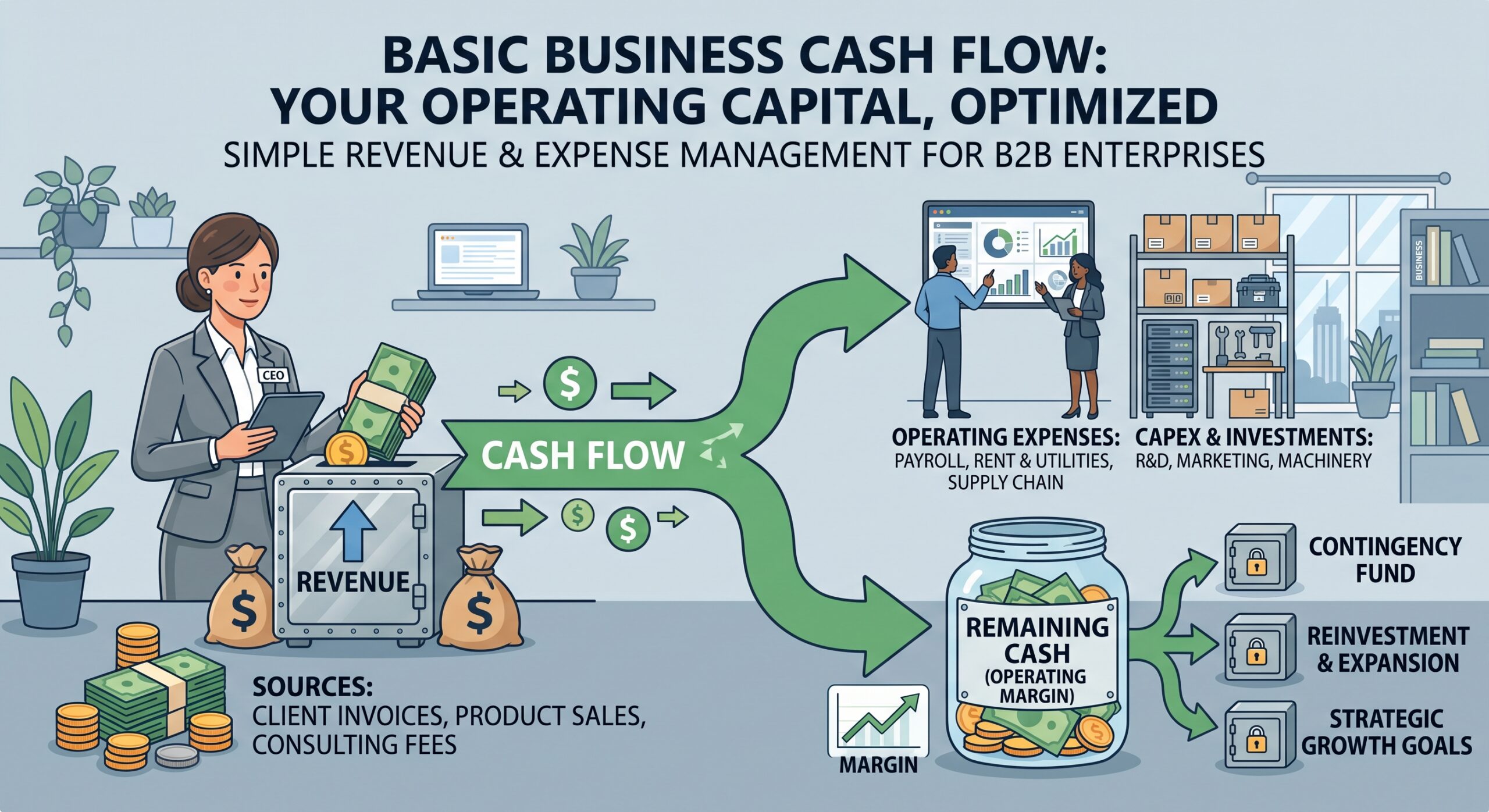
- Cash Flow: Cash flow is the literal movement of dollars into and out of your bank accounts. It tracks real-time liquidity and determines your ability to meet immediate financial commitments.
Profit tells you if your business model is sustainable in the long run. Cash flow keeps the lights on today!
4 Silent Cash Drains That Eat Your Bank Account
Where does the money go if your income statement shows a profit? These four common financial activities absorb cash without showing up as immediate expenses on your Profit & Loss statement:
1. Slow Accounts Receivable (A/R)
When you invoice a client for $10,000, that $10,000 instantly counts as revenue on your income statement, driving up your paper profit. However, if the client takes 60 or 90 days to pay, you have $0 in actual cash. In the meantime, you still have to pay your staff, suppliers, and operating overhead out of pocket.
2. Loan Principal Repayments
If your business takes out a debt facility or term loan, only the interest portion of your monthly repayment is recorded as an expense on your income statement. The principal repayment reduces your liabilities on the Balance Sheet, taking physical cash out of your bank without lowering your taxable net income.
3. Inventory & Unbilled WIP (Work in Progress)
For product-based businesses or project contractors, purchasing inventory or spending upfront labor costs consumes cash immediately. However, those costs sit on the balance sheet as assets until the inventory or project is completed and sold. You’ve spent the cash, but your profit isn’t impacted until later.
4. Overhead Expense Creep
If left unchecked businesses often end up with small cash leaks in over head expenses. Over time you end up with unused software licenses that auto-renew. Sometimes you have equipment or vehicles that you’re paying for that you don’t need anymore.
3 Actionable Steps to Protect Your Cash Flow
- Implement a 13-Week Cash Flow Forecast: Don’t rely solely on your monthly income statement to manage day-to-day decisions. Build or request a rolling 13-week cash forecast to anticipate dips before they happen.
- Incentivize Faster Payments: Shorten customer payment terms from Net-30 to Net-15, require upfront deposits for large projects, or offer small early-payment discounts to accelerate receivables.
- Align Growth with Working Capital: Plan your production and only purchase what you need. Unused inventory only ties up your cash. Work with your suppliers to get terms, instead of paying for materials up front ask if you can wait 30 days. This will free up cash and give you an opportunity to collect funds from your customer first and then pay your vendor.
Need Help Solving Your Cash Flow Puzzle?
Managing cash flow isn’t just about bookkeeping—it’s about strategic planning. Proper planning can help your business grow. If you need help or want an outside opinion reach out and we would be happy to help.
Recent Comments